
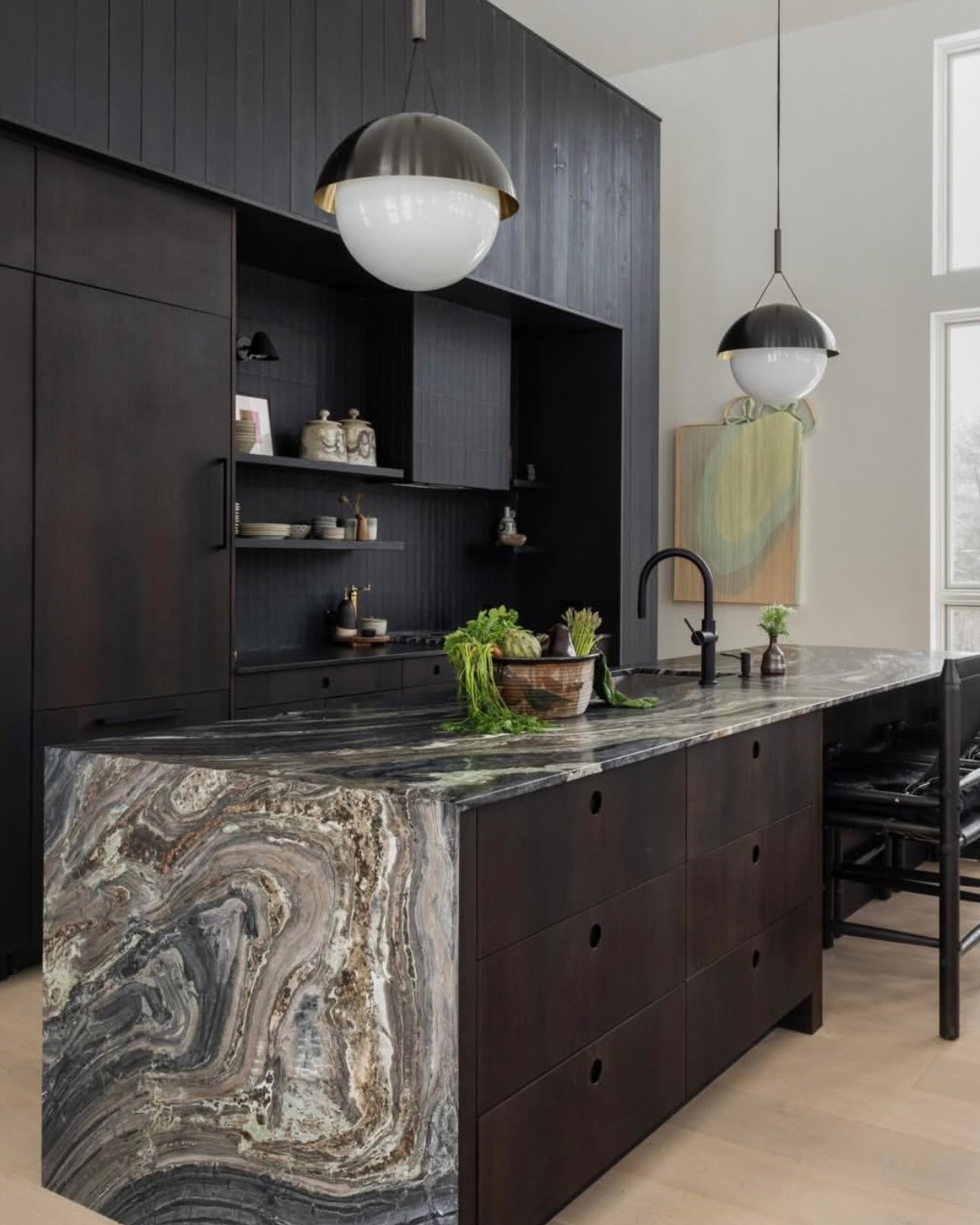

Aesthetic: Authenticity vs. Precision
Natural stone offers something that cannot be replicated: authentic variation formed over thousands of years. Each slab is inherently unique, with veining, movement, and depth that give a space a sense of permanence and character.
Porcelain, on the other hand, is engineered for consistency. Modern manufacturing allows for highly realistic interpretations of stone, often with controlled patterning and repeatability.
What designers consider:
- Natural stone for one-of-a-kind, high-impact spaces
- Porcelain for a clean, uniform look or when consistency is key
- The level of variation appropriate for the scale of the project
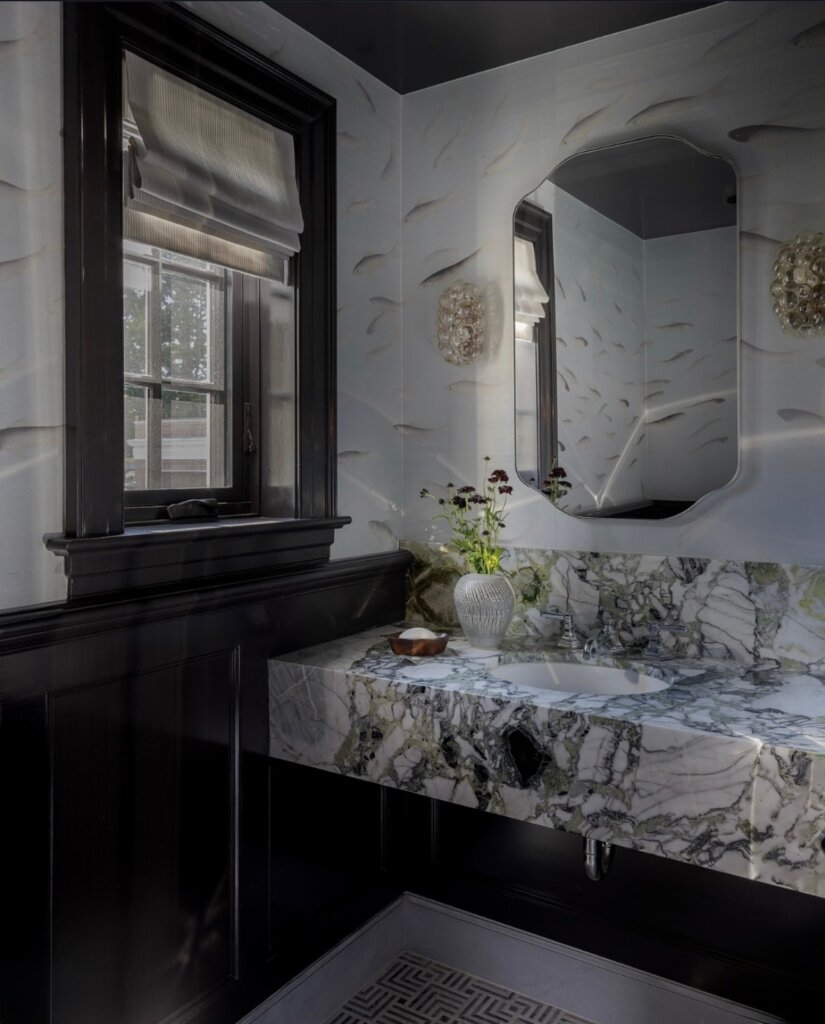
Pictured: Natural Stone Powder Room
Designer: Mimi & Hill
Performance: Lifestyle Matters
Material selection is not just visual, it’s functional.
Natural stone is durable and long-lasting, but it is also porous and reactive, meaning it requires proper sealing and maintenance. Over time, it develops a patina that many designers and homeowners value.
Porcelain is non-porous, highly resistant to staining, scratching, and moisture, and requires minimal maintenance.
What designers consider:
- High-traffic areas → often porcelain.
- Bathrooms, kitchens, feature areas → depends on use and client expectations.
- Clients open to natural aging vs. those wanting low-maintenance perfection.
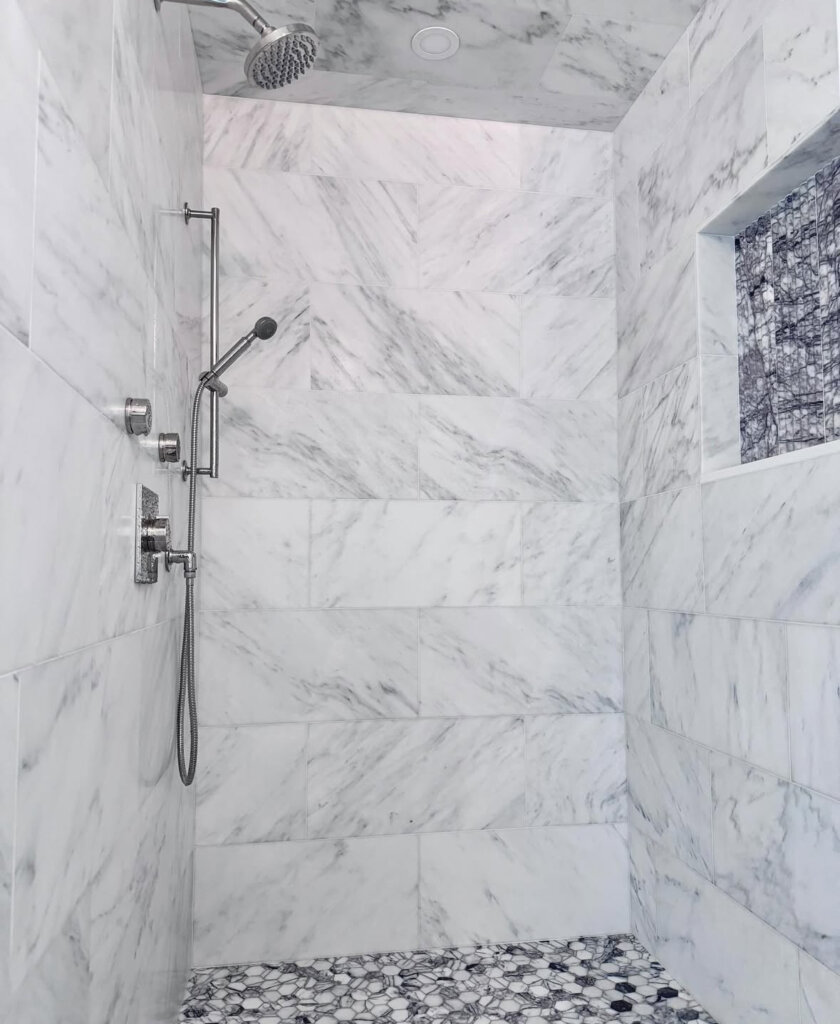
Application: Where Each Material Excels
Understanding where a material performs best is key to a successful design.
Natural Stone is often used for:
- Statement bathrooms and spa-like environments
- Fireplace surrounds
- Feature walls and custom installations
- Spaces where materiality and depth are the focus
Porcelain is often used for:
- High-traffic flooring
- Commercial or hospitality environments
- Outdoor applications (depending on specification)
- Projects requiring durability with minimal upkeep
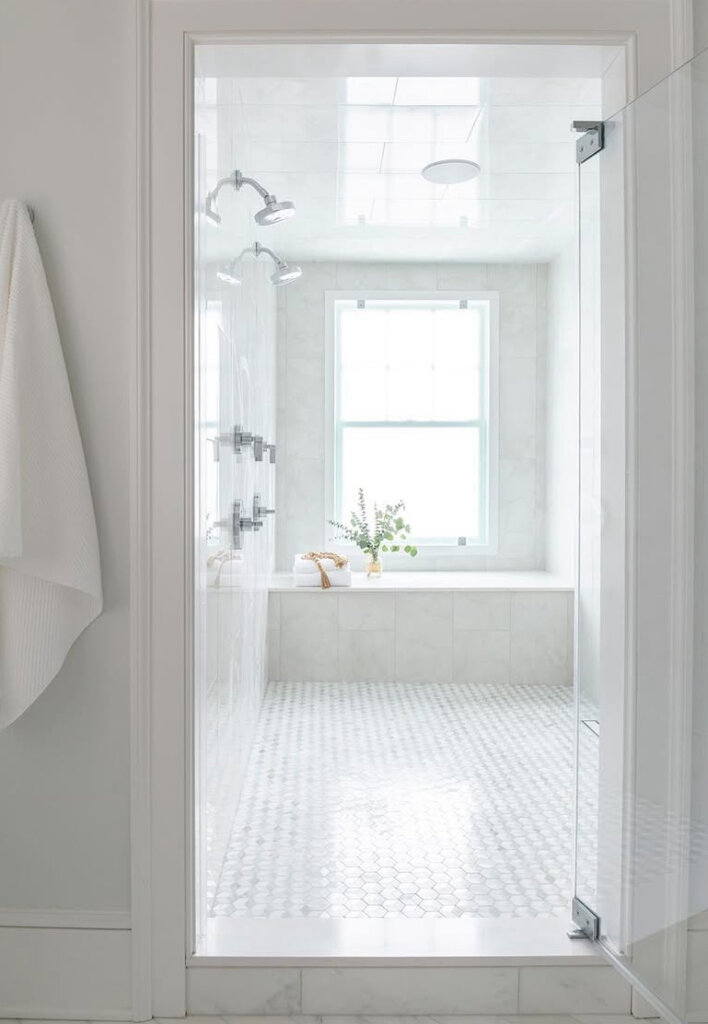
Design Intent: The Deciding Factor
Ultimately, designers don’t choose materials in isolation, they choose them based on the story the space is meant to tell.
Natural stone brings warmth, variation, and a sense of history.
Porcelain brings precision, performance, and versatility.
The best projects often incorporate both, using each material where it performs best.
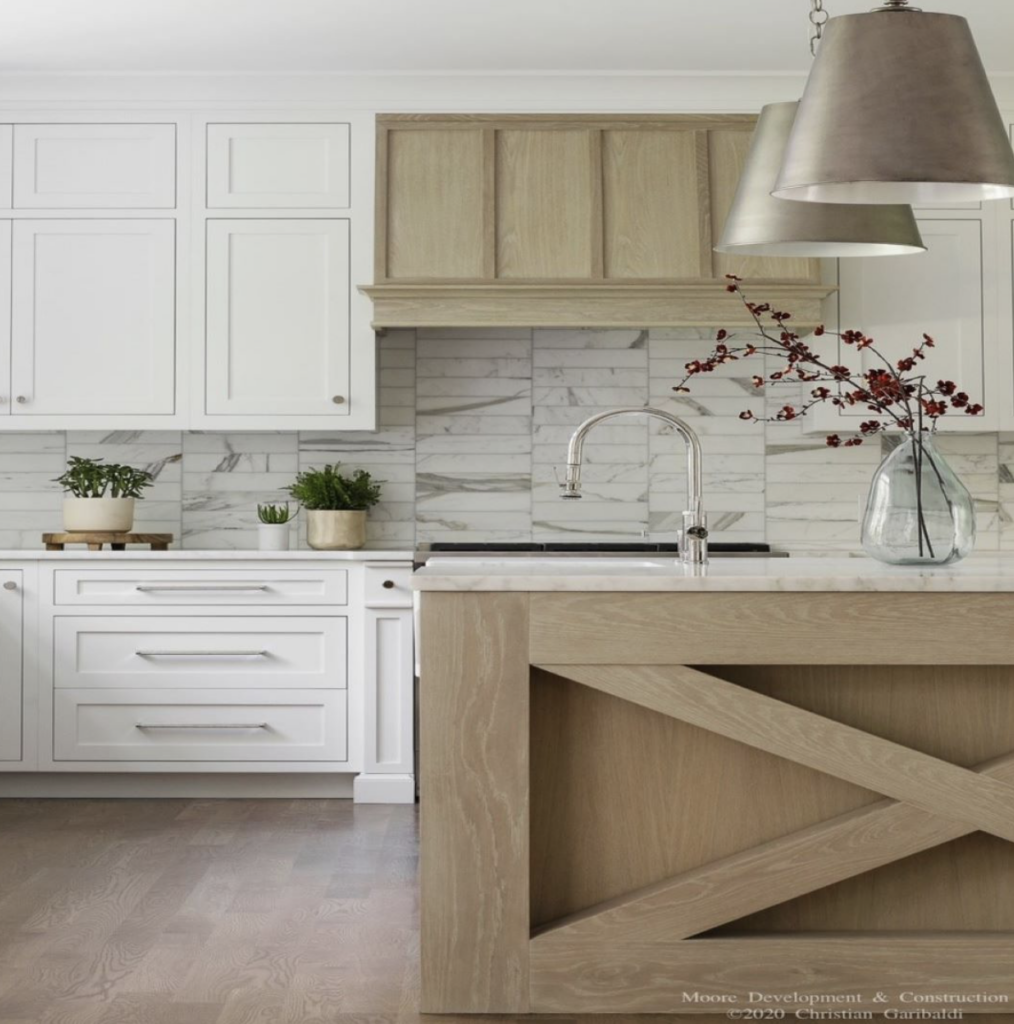
Real-World Approach
In many of the projects we work on, the selection isn’t either/or—it’s strategic.
For example:
- A marble vanity or feature wall paired with porcelain flooring for durability
- Natural stone used in lower-traffic, high-visibility areas
- Porcelain specified in secondary spaces to maintain performance without compromising design
This layered approach allows for both beauty and practicality.
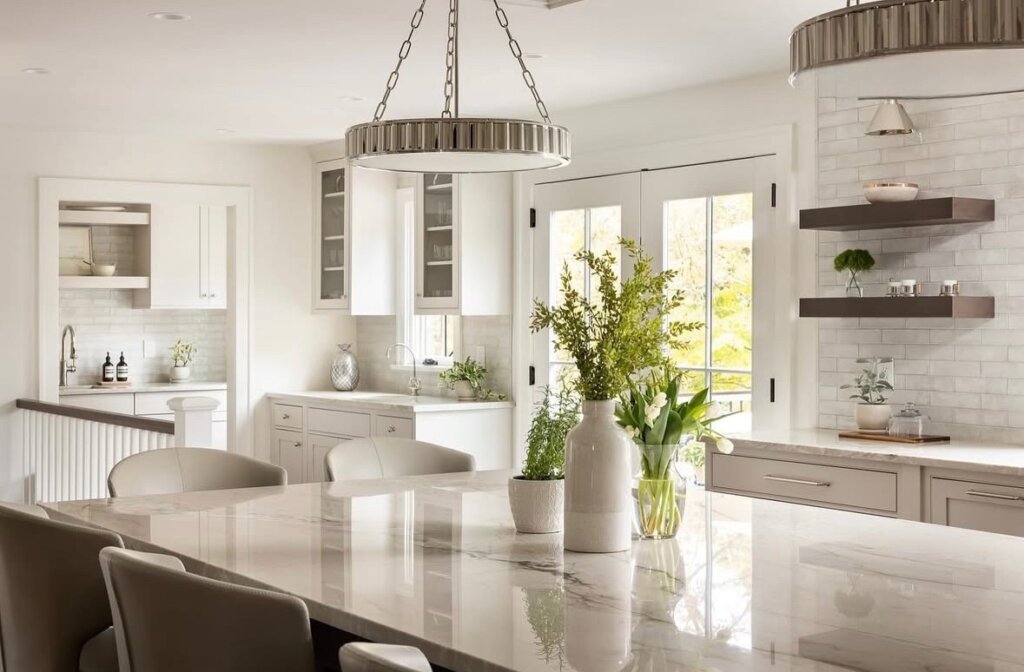
The Role of Expertise
Choosing between natural stone and porcelain isn’t just about preference; it requires an understanding of material behavior, installation, and long-term performance.
That’s where we come in.
At Short Hills Marble & Tile, we don’t just present options, we guide clients and designers through the entire process, ensuring each material is selected with intention and confidence.

Final Thoughts
The question isn’t stone or porcelain.
The question is: what does this space need to perform beautifully over time?
When selected thoughtfully, both materials have a place in exceptional design.
0 Comments for “Natural Stone vs Porcelain: What Designers Actually Choose (and Why)”